What to Look for in a Quality Child Care Program

Finding a quality child care program involves more than choosing a convenient place for your child to spend the day. Parents want an environment where children feel secure, form positive relationships, explore their interests, and develop skills that prepare them for future learning.
But what separates a thoughtful program from one that simply meets basic needs? The answer often becomes clearer when you look closely at how teachers interact with children, how the day is structured, what children are learning, and how families are included. Knowing what to evaluate can help you choose a program with greater confidence.
Look for Caring and Responsive Teachers
Teachers shape much of a child's experience in care. Beyond qualifications and experience, pay attention to how they communicate with the children around them.
Quality interactions should feel warm, patient, and respectful. Teachers should listen when children speak, respond when they need help, and encourage them to participate without unnecessary pressure. They should also recognize that children develop at different rates and may need different kinds of support.
Observe the Classroom During a Visit
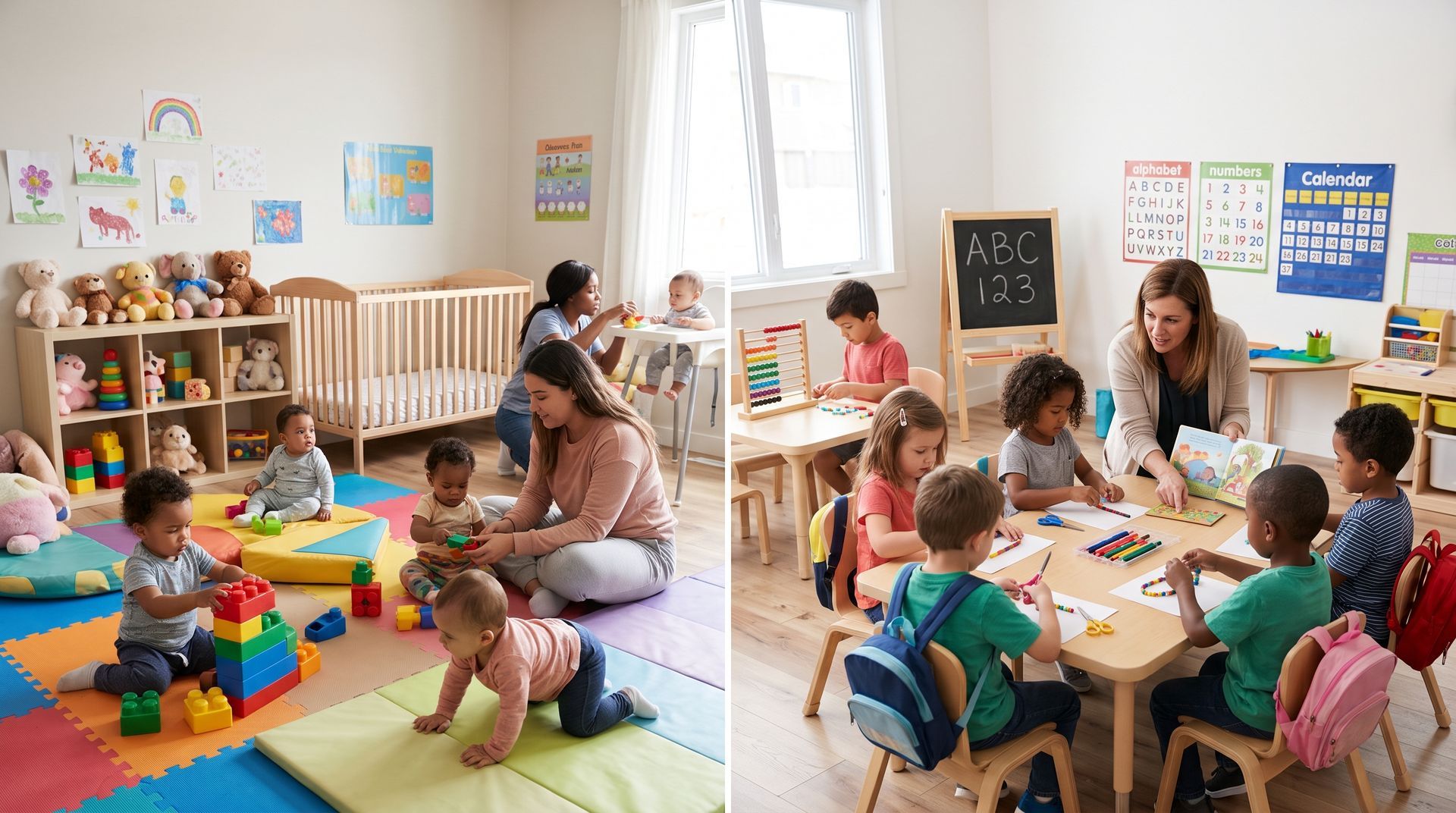
A tour offers valuable insight into teacher-child relationships. Watch whether teachers get down to children's eye level, join activities, ask questions, and offer reassurance when needed.
Also notice how children respond. Do they comfortably approach their teachers? Are they engaged in activities? A classroom where children feel secure enough to explore and communicate can be a positive sign of responsive care.
Consider How the Daily Routine Is Structured
Young children benefit from consistency, but a quality child care program should not feel rigid. A thoughtful daily routine provides enough predictability to help children know what to expect while allowing flexibility for their needs and interests.
Ask how the program balances learning activities, play, movement, meals, rest, outdoor experiences, and transitions throughout the day. Each part of the schedule should have a purpose.
Transitions matter, too. Moving from playtime to lunch or from outdoor activities to rest can be challenging for young children. Teachers who prepare children for these changes can help the day feel calmer and more manageable.
Explore the Program's Approach to Learning
Early learning should be active and engaging. Children develop knowledge by exploring materials, asking questions, talking with others, solving problems, creating, and using their imaginations.
A quality program provides opportunities to strengthen several areas of development, including communication, physical coordination, social-emotional skills, creativity, early literacy, and problem-solving.
Parents interested in the learning opportunities available at Busy World Learning Center can explore its Child Care Programs.
Ask How the Curriculum Guides Learning
Curriculum gives teachers a framework for creating meaningful experiences rather than selecting activities without clear developmental goals.
Ask how teachers use the curriculum to plan classroom experiences and respond to children's abilities and interests. A thoughtful approach provides guidance while recognizing that young children do not all learn in exactly the same way or at the same pace.
Busy World Learning Center uses The Creative Curriculum, which emphasizes developmentally appropriate learning experiences. Reviewing the curriculum can help families understand how classroom activities support children's growth.
Pay Attention to the Learning Environment
The physical classroom influences how children interact with their surroundings. A quality learning environment should be welcoming, organized, and appropriate for the age group using it.
Look for materials children can safely access and spaces designed for different types of activity. Books, creative materials, manipulatives, dramatic play areas, and age-appropriate learning resources can encourage children to make choices and explore.
The environment should also allow for both active and quieter experiences. Children sometimes need space to move and collaborate, while at other times they may benefit from reading, concentrating, or taking a break from a busy group.
Evaluate Health, Safety, and Supervision Practices
Parents should feel comfortable asking how a program protects children throughout the day. Learn about supervision practices, secure arrival and pickup procedures, emergency planning, illness policies, sanitation, and how staff respond to injuries or unexpected situations.
Look around during your visit as well. Classrooms and play areas should appear maintained and suitable for young children. Teachers should be positioned so they can appropriately supervise activities rather than being regularly distracted from the group.
Clear practices demonstrate that safety is integrated into everyday operations rather than treated as an afterthought.
Ask How the Program Communicates With Parents
Families should know what is happening in their child's care. Communication may include information about daily experiences, routines, developmental progress, classroom events, or concerns that deserve attention.
Just as importantly, parents should have a way to communicate with teachers. Sharing information about changes at home, new routines, interests, or developmental milestones can help teachers better understand a child's needs.
A collaborative relationship between families and educators creates greater continuity between home and the child care environment.
Think About Your Child's Ongoing Development
A quality child care program should support children as their needs change. What engages a younger toddler will not necessarily challenge an older preschooler, so experiences should evolve with development.
Ask how teachers observe progress, introduce new challenges, and encourage growing independence. The goal is not to rush children toward the next milestone but to provide appropriate opportunities for them to practice emerging skills.
Choose a Program That Supports the Whole Child
The strongest child care programs bring together responsive teachers, purposeful learning, dependable routines, safe environments, and meaningful family communication. Instead of evaluating one feature in isolation, consider how these elements work together to shape your child's everyday experience.
Busy World Learning Center provides child care programs designed to support children's learning and development. Ready to explore your options? Contact Busy World Learning Center to learn more about the program that may be right for your child.
Recent Posts