Daycare vs. Preschool: Which Is Right for Your Child?
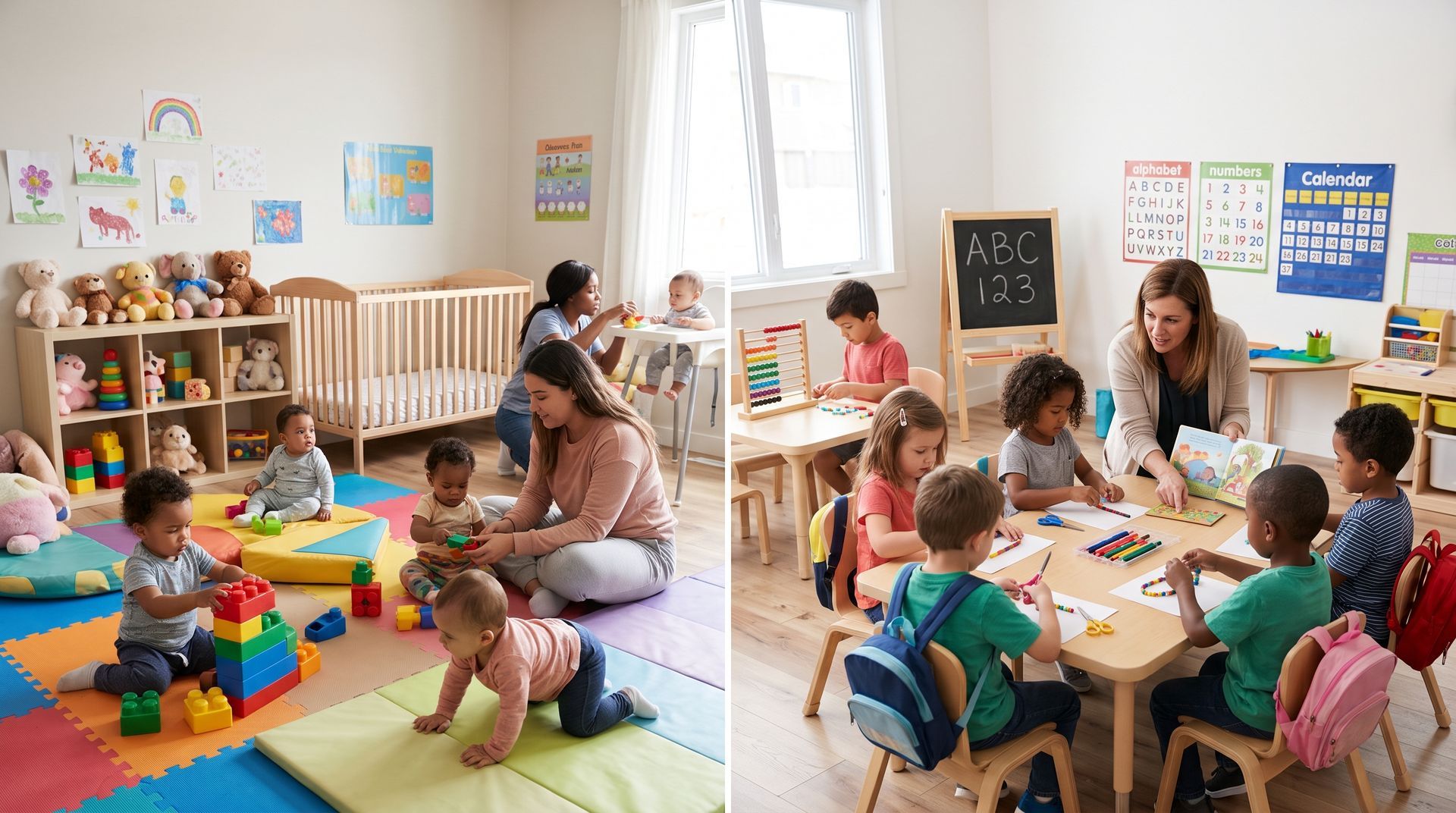
When families begin exploring early care and education, one question often comes up: daycare vs. preschool—which option is right for your child? Although the terms are sometimes used interchangeably, programs can differ in the ages they serve, daily schedules, routines, and approaches to early learning.
Neither option is automatically better for every child. What matters is finding an environment that provides dependable care while supporting your child's current stage of development. Understanding the general differences between daycare and preschool can help you ask better questions and make a more confident decision.
What Is the Difference Between Daycare and Preschool?
Daycare generally refers to child care designed to provide consistent care during the day. Programs may serve children across several age groups and combine daily routines with play, social interaction, creative activities, and age-appropriate learning experiences.
Preschool typically places a stronger emphasis on preparing young children for the transition toward kindergarten and future classroom experiences. Activities may introduce early literacy, language, numbers, creative expression, problem-solving, and social-emotional skills.
These descriptions are not universal, however. Many child care programs incorporate purposeful early learning throughout the day, while preschool programs also provide nurturing care, play, meals, rest, and opportunities for social development. Parents should evaluate what a specific program offers rather than making a decision based on its name alone.
Consider Your Child's Age and Development
Age can help narrow your choices, but developmental readiness is just as important. Children grow at different rates, and two children of the same age may have very different strengths, interests, and needs.
A younger child may require more support with routines, communication, transitions, and separation from family. As children develop, they often become increasingly interested in peers, imaginative play, conversations, problem-solving, and completing everyday tasks more independently.
Instead of asking only whether your child is old enough for preschool, consider how they respond to groups, routines, new adults, and unfamiliar activities. These observations can help you identify an environment with an appropriate balance of support and new challenges.
Compare the Daily Routines
Daily structure is an important part of the daycare vs. preschool comparison. Ask each program what children actually experience between arrival and pickup rather than assuming what the schedule includes.
What Does a Typical Day Include?
A balanced day may include child-led play, teacher-guided activities, meals, movement, outdoor time, creative experiences, stories, rest, and opportunities to interact with other children.
Preschool programs may set aside specific periods for planned learning experiences, while daycare programs may provide care across a broader daily schedule. However, a longer child care day can still include structured, developmentally appropriate learning.
Parents can explore Busy World Learning Center's Child Care Programs to learn more about experiences designed for children at different stages of development.
Look Beyond Academics When Comparing Programs
Preparing for school involves much more than recognizing letters, numbers, shapes, or colors. Young children also need opportunities to develop communication, confidence, independence, emotional regulation, physical coordination, and the ability to participate with others.
Play can contribute to these skills in practical ways. Building with blocks encourages planning and problem-solving. Pretend play supports communication and imagination. Group experiences allow children to practice listening, cooperating, taking turns, and expressing their ideas.
When comparing daycare vs. preschool, consider how each program supports the whole child rather than focusing only on visible academic activities.
Understand the Approach to Curriculum
A curriculum gives educators a framework for planning purposeful experiences around children's development. Parents can ask how teachers select activities and adapt learning opportunities for different abilities, interests, and developmental stages.
Busy World Learning Center uses The Creative Curriculum, an approach centered on developmentally appropriate learning experiences. Understanding the curriculum can give families a clearer picture of how learning becomes part of a child's everyday routine.
Ask How Teachers Support Individual Progress
Children should not be expected to develop every skill on the same schedule. Ask how teachers observe progress, identify emerging abilities, and introduce new experiences as children become ready for them.
This type of individualized support is worth considering whether a program is described as daycare, preschool, child care, or an early learning center.
Consider Social and Emotional Development
For many children, early learning programs provide regular opportunities to build relationships outside their immediate family. Children practice communicating their needs, participating in groups, navigating disagreements, sharing spaces, and recognizing the feelings of others.
Teachers can support these experiences by modeling communication and helping children work through age-appropriate social situations. With time and practice, children can become more comfortable interacting with peers and participating in a group environment.
When visiting a program, observe whether children have meaningful opportunities to interact rather than simply spending time in the same classroom.
Decide What Works for Your Family
Your child's developmental needs should guide the decision, but the program also needs to fit your family's daily life. Consider operating schedules, location, communication methods, program options, and how transitions between age groups are handled.
It can also help to ask whether children can remain within the same center as they grow. Familiar surroundings and established relationships may provide valuable continuity as children move into new developmental stages.
Daycare vs. Preschool: Focus on the Right Fit
Ultimately, the daycare vs. preschool decision should focus less on the label and more on the experience your child will receive. Look for attentive teachers, purposeful learning, appropriate routines, positive relationships, and an environment where your child can develop with confidence.
Busy World Learning Center supports children through thoughtful care and early learning experiences. Ready to explore the right fit? Contact Busy World Learning Center to learn more.
Recent Posts